Education begins long before children enter a classroom. For centuries, learning started at home through curiosity, storytelling, exploration, and relationships with parents and community. Yet modern schooling, shaped during the industrial era, increasingly focused on certification, exams, and measurable outcomes. Many children today love learning but struggle with traditional school systems that separate curiosity from credentials. This article explores how parents can reclaim meaningful learning by reconnecting education with family life, nature, community, and real experiences. As technology and AI reshape education, there is a growing opportunity to separate learning from certification and rediscover a more human approach to education that begins at home.
“Ma, I love learning, but I hate school.”
Old Boy was nine when he said it, and those words changed the trajectory of his education forever.
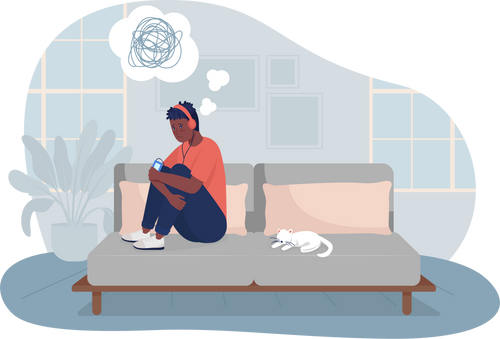
He did not say it angrily. It sounded more like a quiet observation, the way children sometimes notice contradictions adults have stopped seeing. Old Boy loves questions. He likes figuring out how things work. He enjoys stories about animals, space, strange machines, and the small mysteries of everyday life.
Learning excites him.
But somehow, in his mind, learning and school had become two different things.
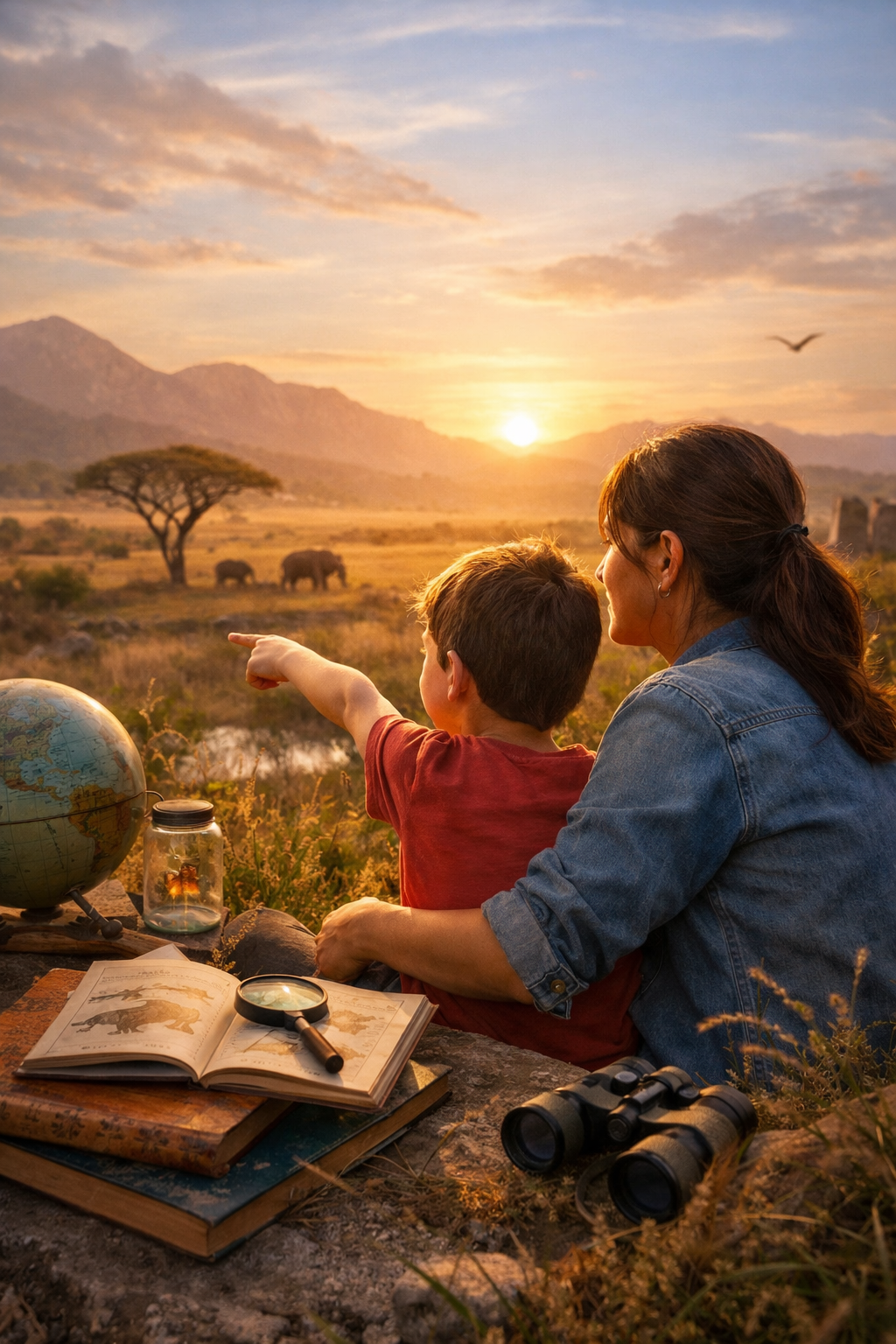
The moment reminded me of a scene from The Lion King. A young lion cub walks beside his father across the savanna, asking questions about everything he sees. His father does not lecture him from a desk. He points to the land, tells stories, and explains how the world works.
The lesson happens while they walk together.
That scene feels natural because it reflects something ancient. For most creatures on Earth, learning begins with parents. A young lion learns to hunt by watching its mother. Birds learn their songs from older birds. Wolves learn the rules of the pack simply by living inside it.
Humans begin the same way.
Long before children enter classrooms, they have already absorbed language, curiosity, habits, and ways of thinking from the people closest to them. Parents do not simply teach information. They shape how a child approaches the world.
Over time, humans expanded this circle of learning. Children learned from neighbors, elders, craftsmen, teachers, and storytellers. Then writing allowed people to learn from thinkers who lived centuries earlier. A student studying mathematics today is still learning from minds that lived thousands of years ago.
Humans are perhaps the only species that regularly learns from the dead.
For most of history, education was a web of relationships. Families, communities, mentors, and books all contributed to a child’s understanding of the world.
Then the industrial age reshaped education.
During the nineteenth century, schools were redesigned to produce workers for factories and bureaucracies. Children were grouped by age, subjects divided into compartments, and the day structured by bells and schedules.
The system was efficient.
It expanded literacy and allowed millions to access education. But it also changed the purpose of schooling. Education became tightly linked to certification. Diplomas and degrees became signals of competence, a kind of currency in the modern economy.
And like all currencies, people began optimizing for them.
Students studied for grades rather than curiosity. Families pursued credentials rather than exploration. Schools focused on measurable outcomes rather than meaningful experiences.
Along the way, something subtle was lost.
Relationships.
Parents became managers of homework rather than companions in discovery. Conversations about the world were replaced by reminders about tests. The question changed from “What did you discover today?” to “How did you score?”
Yet the experiences that shape a child most deeply rarely appear on report cards.
A child who travels with a parent and notices a flower blooming in a different country learns that the world is vast and alive. A child who walks through a forest and hears how trees share nutrients through their roots begins to feel connected to nature.
A child who listens to stories about their grandparents—how they migrated, struggled, built families—learns history in its most human form.
Yet many children can recite the dates of distant battles while knowing almost nothing about their own family’s story.
In our pursuit of certification, we may have unintentionally weakened the relationships that make learning meaningful.
Old Boy’s question forced me to confront that tension.
For the past two decades, raising my children has also meant quietly rethinking education. I would not claim to have solved the puzzle. Like many parents, I have simply been searching for better ways to preserve a child’s love of learning while navigating the realities of formal schooling.
What I have discovered is that the most important parts of education still begin at home.
They appear in small moments: walking through a forest, cooking together, building something with tools, listening to family stories, or simply following a child’s curiosity wherever it leads.
Schools may continue to certify knowledge. That currency will likely remain part of our world.
But the love of learning, the curiosity that drives discovery, and the relationships that give knowledge meaning, those things still begin long before any classroom.
And perhaps the task for parents today is not to reject schools, but to make sure that learning remains larger than them.
Because when a child says, “I love learning,” that spark is far too precious to lose.
Old Boy’s question forced me to confront that tension.
For the past two decades, raising my children has also meant quietly rethinking education. I would not claim to have solved the puzzle. Like many parents, I have simply been searching for ways to preserve a child’s love of learning while navigating the realities of formal schooling.
What I have discovered is that the most important parts of education still begin at home. In small moments: walking through a forest, cooking together, building something with tools, listening to family stories, or simply following a child’s curiosity.
Schools may continue to certify knowledge. That currency will likely remain part of our world. But the love of learning, the curiosity that drives discovery, and the relationships that give knowledge meaning begin long before any classroom.
That conviction led me to found several schools over the years. Yet eventually I realized something simpler: perhaps the goal is not to keep building more schools, but to bring the essence of a school back into every community, no matter how small.
A place where learning grows out of relationships, curiosity, and life itself.
If we can do that, perhaps more children will simply say:
“I love learning.”