Archive for the ‘Comparison Education’ Category

How the pandemic forced us to relook education

[vc_row type=”in_container” full_screen_row_position=”middle” column_margin=”default” column_direction=”default” column_direction_tablet=”default” column_direction_phone=”default” scene_position=”center” text_color=”dark” text_align=”left” row_border_radius=”none” row_border_radius_applies=”bg” overlay_strength=”0.3″ gradient_direction=”left_to_right” shape_divider_position=”bottom” bg_image_animation=”none”][vc_column column_padding=”no-extra-padding” column_padding_tablet=”inherit” column_padding_phone=”inherit” column_padding_position=”all” background_color_opacity=”1″ background_hover_color_opacity=”1″ column_shadow=”none” column_border_radius=”none” column_link_target=”_self” gradient_direction=”left_to_right” overlay_strength=”0.3″ width=”1/1″ tablet_width_inherit=”default” tablet_text_alignment=”default” phone_text_alignment=”default” column_border_width=”none” column_border_style=”solid” bg_image_animation=”none”][vc_column_text]Prior to the pandemic, it seemed that the epitome of a good education was only found in elite schools, augmented by endless after-school enrichment, tuition and supplementary classes. Many parents believed that the more their children left their homes for academic pursuits, the better their chances of doing well in school.

The Pandemic

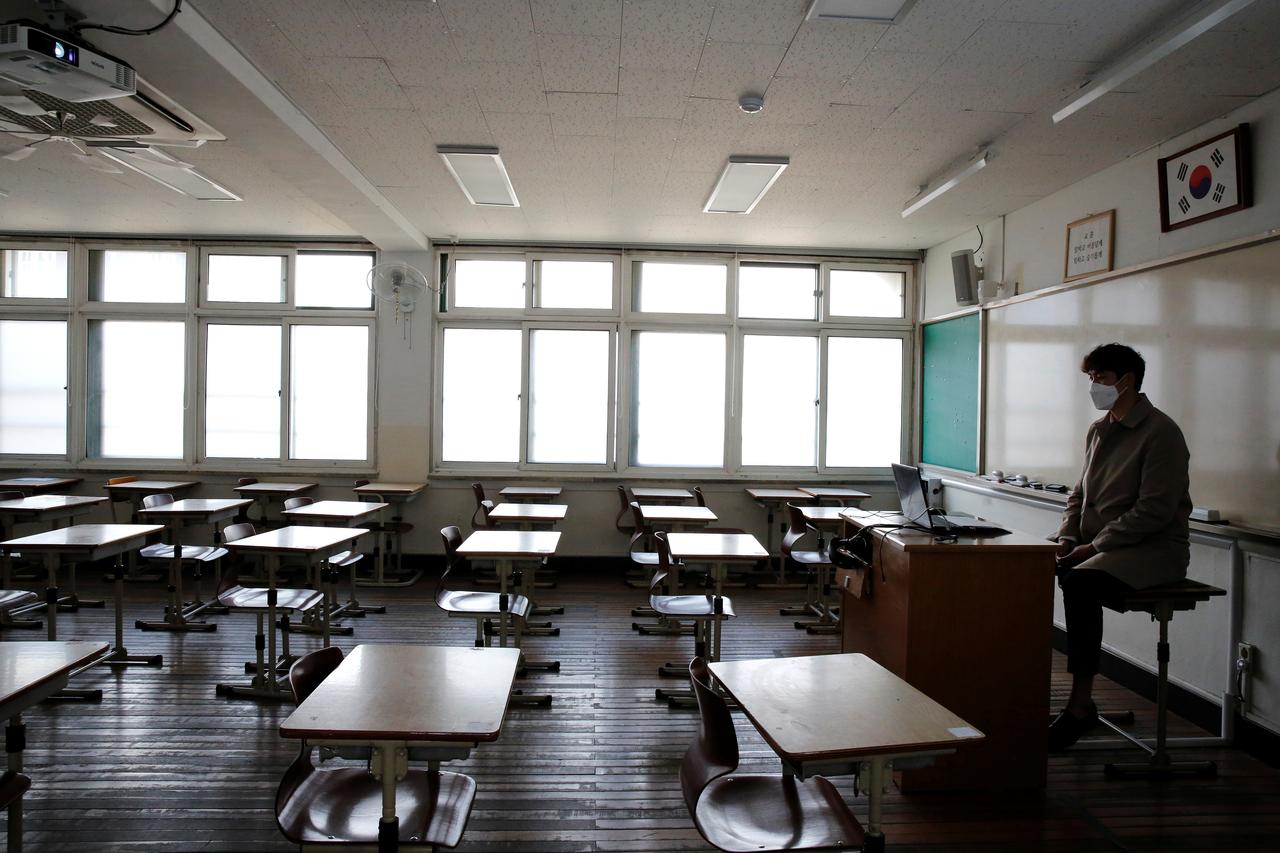
Then Covid-19 hit, and everybody had to stay home. Most schools deployed off-the-shelf learning management systems that dispensed homework as a stop-gap measure.

Under pressure, teachers were forced to slap together Zoom and video classes quickly, delivered in formats they were neither familiar nor comfortable with. Commercial entities took the opportunity to launch sometimes half-baked online learning platforms, mostly in the form of video conferencing. There were also horror stories of hackers entering kids’ classrooms to wreak havoc. Parents started to question if this was the kind of education that would help their children ace the school system.

Outdated School Systems

But even before 2020, there were already rumblings that school systems were no longer relevant. Many of us know that the current K to 12 (kindergarten to Grade 12) compulsory education system is outdated. It started in Prussia in 1800, borne out of the need to have a large workforce during the industrialisation age. While mass education has reduced illiteracy and benefited billions of people, it is still a 200-year-old system that has failed to keep up with the times.

The traditional school system, where the teacher acted as the sage on stage dispensing knowledge worked wonders for my generation, but why should it be effective for digital natives born after 1999? They found their own alternatives to the 45-minute-lecture – a two-minute-Youtube video made by a world-class instructor, played at 1.8xnormal speed.

Alternative Paths and Individualised Education

Technology and alternative ideas have been seeping into our mass education system, along with the recognition that the era of mass education is over. Covid-19 signals it is time to embark on individualised education.

As a mother of five, I’ve learnt education is not what our children can get out of schools; rather, education is what I can put into a child. To put the right education into my child, I need to first spend time to understand his or her passions, gifts and learning styles. Most people like to work on what they are good at, so I spend time to observe what my kids want to work on, and then find resources to bring them up to their fullest potential, while levelling them up in areas they are weak in. The main objective is to build up their self-esteem and confidence by allowing them to excel at things they love.

I loved teaching my own children. From learning how to model math questions to taking courses to update my computer programming skills, I found myself constantly upgrading just to participate in my kids’ education actively. No matter which stage of their education, our home has been the most important learning venue for my family.

Not everybody agrees with my approach. But it has always puzzled me. Why spend time trying to ace a system when I can use that time to give my children a great education?

The Changing Playing Field

Covid-19 has started us off with the great home-based learning experiment. However, to fully harness the strength of home-based learning, instructional design must not only leverage technology to fully integrate with school-based learning, it must also fully involve parents, educators and peers.

For starters, parents must get involved. First, with kids studying at home, we can observe their learning styles and provide valuable insights to their teachers. Second, we can acquire free and paid resources to activate better learning. Students can now work on the topics in which they are most passionate, at the level they are most comfortable. Don’t be afraid to go for materials that are beyond your child’s level according to the school curriculum.

Besides instructor-led activities, I like to provide opportunities for students to do research and self-study at their own pace, as well as engage their peers to learn how to negotiate, follow and lead. I also  give them  time and space to reflect on lessons.

All of my children earned their bachelor degrees before they turned 18. More interestingly, at the  online international school, which I started in 2015I have  managed to radically accelerate about 300 students from Singapore, Malaysia, Australia, Indonesia, Hong Kong and China with different capabilities, from those with learning disabilities or who were streamed into Normal Tech at PSLE, to those who are exceptionally gifted.

As always for me, it is not about how much students achieve academically, but how happy they are in the process that counts.
[/vc_column_text][/vc_column][/vc_row][vc_row type=”in_container” full_screen_row_position=”middle” column_margin=”default” column_direction=”default” column_direction_tablet=”default” column_direction_phone=”default” scene_position=”center” text_color=”dark” text_align=”left” row_border_radius=”none” row_border_radius_applies=”bg” overlay_strength=”0.3″ gradient_direction=”left_to_right” shape_divider_position=”bottom” bg_image_animation=”none”][vc_column column_padding=”no-extra-padding” column_padding_tablet=”inherit” column_padding_phone=”inherit” column_padding_position=”all” background_color_opacity=”1″ background_hover_color_opacity=”1″ column_shadow=”none” column_border_radius=”none” column_link_target=”_self” gradient_direction=”left_to_right” overlay_strength=”0.3″ width=”1/1″ tablet_width_inherit=”default” tablet_text_alignment=”default” phone_text_alignment=”default” column_border_width=”none” column_border_style=”solid” bg_image_animation=”none”][image_with_animation image_url=”17737″ animation=”Fade In” hover_animation=”none” alignment=”” border_radius=”none” box_shadow=”none” image_loading=”default” max_width=”100%” max_width_mobile=”default”][/vc_column][/vc_row]

Alternate Paths to Education

[vc_row type=”in_container” full_screen_row_position=”middle” column_margin=”default” column_direction=”default” column_direction_tablet=”default” column_direction_phone=”default” scene_position=”center” text_color=”dark” text_align=”left” row_border_radius=”none” row_border_radius_applies=”bg” overlay_strength=”0.3″ gradient_direction=”left_to_right” shape_divider_position=”bottom” bg_image_animation=”none”][vc_column column_padding=”no-extra-padding” column_padding_tablet=”inherit” column_padding_phone=”inherit” column_padding_position=”all” background_color_opacity=”1″ background_hover_color_opacity=”1″ column_shadow=”none” column_border_radius=”none” column_link_target=”_self” gradient_direction=”left_to_right” overlay_strength=”0.3″ width=”1/1″ tablet_width_inherit=”default” tablet_text_alignment=”default” phone_text_alignment=”default” column_border_width=”none” column_border_style=”solid” bg_image_animation=”none”][vc_column_text]The social media is flooded many grandiose views of the many alternate pathways to education from everywhere. Are they for real, are they just competing for airtime or are they meant for entertainment only?

Why are people debating on class size, when students cannot even attend class. Is going to university really an aspiration in the next few years, as some families struggle to put food on the table?

I watched and wondered what kind of impact these policies might have on our children. Parents must be concerned. Are things going to be just as pressurizing? More tuition? Or super relaxed?

Now that the election is over, is the show over? So, can we get back to reality? Does it mean we are just returning to the old system?

Wait.

What old system are we referring to? Are we still waiting for the coronavirus crisis to be over so that our kids can resume their usual routine of going to school and we can resume our lives? Is the old system really coming back?

Let’s get real. It is not. So is this good or bad news? Not too long ago, weren’t we complaining about how outdated the education system was? In 2007, Sir Ken Robinson asked us if schools kill creativity. His speech became the most watched Ted Talk. While the technology has been ready for a while now, educators and policy makers have been dragging their feet in implementing any groundbreaking policies. After all, why change when things are not broken.

But things are broken. The pandemic has forced us to relook at education as we have limited abilities to send our kids to sit in classrooms. On July 7, US ICE issued the policy that foreign students who can attend classes online will not be allowed to stay in America. Granted, they were forced to reverse that decision very quickly. But how long will this hold up?

Clearly, online education is here to stay, with its role getting more important. I am amazed that in this time and age, there are still people who insist that certificates or degrees earned with some online components are not as rigorous or should be less regarded than those that were done in person.

While there are some fields that can only be taught in person, those that can be taught online will be better delivered through the use of technology. In fact, many of these programs will have better instructional design, more modern and with better instructors than face-to-face instructions.

Teaching online requires some additional skill set and a different disposition from teaching in person. It also involves different issues.

These days, will we still risk to send our kids to any educational institution that does not have effective online strategies? In fact, do you think any school should exist if its online program lackluster? We know that in future, any kind of studies will have at least part of its program delivered online.

Besides having teachers trained to deliver curriculum online, a good online program should also incorporate proper planning and good instructional design. The days of pressurized teachers slapping together zoom and video classes quickly and delivering in formats they were neither familiar nor comfortable with should be over.

In fact, the new norm presents many alternatives to education. Whether our children excel in education depends on how we cut through this noise and address things that matter before they grow up.

I conducting a webinar on alternate pathways to education. We took 10 years to refine our online education programs. Our programs have helped hundreds get into the most prestigious universities in the world. Come and listen to our methodologies and witness how we have motivated them with all levels of learning abilities to achieve what they themselves didn’t believe they could.

Thousands have already changed their children’s lives through our seminars. Commit 3 hours one Saturday, and see how your kids’ education transform. Suitable for parents of kids above 10 years old, from any part of the world.[/vc_column_text][/vc_column][/vc_row]

Asian vs Western Education

Most people tell me that westerners can accept more ‘nonsense’ and their schools can be panaceas to parents whose children have difficulties in Asian schools. Some people say that Asian schools teach more academically and therefore stretch our children more – I thought so too, until I became a parent to students from both sides.

Asian and Western

I have always been and still am proud of the education I received, which gave me social mobility, so it was hard for me to believe that there was any good education system apart from the one I was familiar with.

Therefore, when I moved to another country, I used to think hard and homeschooled my children until I found good schools that met my criteria.

So far, my children have studied under the Singaporean, Australian, American and Chinese systems, and to be really honest, none is better than the other, and every system has its own merits.

Academic Difference

The western systems tend to pitch Math and Science at lower levels than the Asian systems, or so I thought. Therefore, I did not really look at their Math syllabus or homework thinking my children should be miles ahead of their peers, until my then12-year-old son came home and asked me about cosine, sine and tangent identities.

He skipped a few classes to attend courses at the university, so he did not realize his classmates, all twelve, had gone ahead to cover trigonometry. This is not a class from some expensive private school but a primary school just five minutes’ walk from home.

The school fee was $0 and there was no waiting queue to register the child as the state ensured all students within the catchment get a place. There was no ‘gifted class’ or ‘gifted program’ in the school, yet the class of 25 twelve-year-olds were doing trigonometry.(?) I was actually pleasantly surprised.

During their class time, they also did Japanese, Robotics and History. So instead of mugging for PSLE, these 12-year-olds were getting ready for high school (or secondary school) education in their own ways.

By the time they left their primary school, they knew simultaneous equations, trigonometry identities, persuasive and descriptive writing, history and geography of their own country.

It was an inquiry based system where each kid was allowed to explore as deep as he/she desired. I thought… wow…this teacher accelerated all of her students, amidst her busy schedule of writing nice school-leaver reports for each student.

Disciplinary Difference

Afraid that my son could not fit in, I had hoped for more lenient disciplinary requirements from the school, yet my son was assigned to a really strict old English teacher who could not tolerate nonsense: no sweet or soft drinks in the school, everyone should sit upright, no talking with the mouth full, no talking back, no calling out, and no asking questions in class without raising hands.

So what did she do to ensure orderliness? With a lot of love behind her stern face.

For two occasions when my son did not behave, she called me in and had my son sit in the office with the VP. They would go through his unacceptable actions with him, allowed him to defend himself to understand his perspectives, and then explain why his actions were not acceptable. It was in these sessions I got to know my son’s thoughts better, too.

As a typical old gentle lady, the teacher would punctuate all her sentences with “Darling”, and start her reprimanding with “You may not know it, but…”

I can still recall the last statement from the VP as we left the room, “I look forward to you putting all these bad behaviors aside and then see your contributions in class.  I know we have great things to learn from you with that wonderful mind of yours.”

Cultural Difference

When my son ran out to play without a hat, the same teacher would run after him with one which was usually too small since he was big for his age. 

She was never judgmental.

Would you believe she made my son functional in the classroom again within three weeks and two meetings. All because my son wanted to please and make her happy, so that the class could continue.

He knew she cared and he reciprocated. It is therefore a misconception that Westerners are more tolerant and in my son’s case, she was less.  However, this educator knew how to handle him calmly.

I have these educators to thank forever now that my son can attend university and high school classes.

Common Objectives but Different Premises

How the educators from different cultures handled the same student was starkly different though they wanted to achieve the same thing. I believe it is because they started with different premises: one believed the boy was bad and needed a punishment to ‘wake’ him up, while the other believed he wanted to be good but didn’t know how.

The latter took three weeks to do what the former could not in years.

Unfortunately, in any part of the world, most of us educators and parents spend too little time knowing who our children are. Not all of our children are the same: some are suitable for screaming at or even a spanking, while others are more suitable for talking to.

Some thrive on challenges, others don’t like repetitive work but think creatively. Yet, both types are gifted and precious in their own ways.

If we do not label and judge our students so quickly, but give them a chance to show us what make them tick, perhaps we will have a better chance in giving them a great education, and it really does not matter if it is Western or Asian.


We don’t spam! Read more in our privacy policy